
Glas fibers in polymer matrices
Fiber/polymer matrix interactions control the load transfer from matrix to fibers which influences stiffness and strength. They further define the chemistry, topography and crystallinity of interfaces. As consequence, weak interactions cause early debonding and fiber pull-out, which leads to a reduction of performance and reliability as well as a limited lightweight design potential and increased material usage.
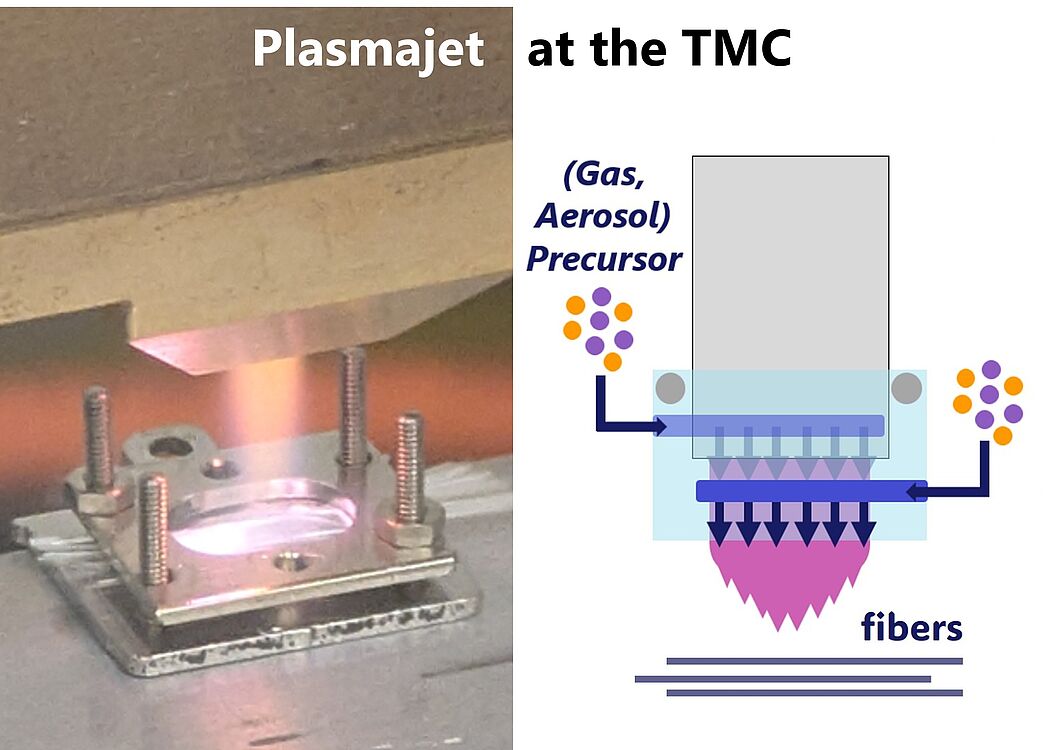
Our research group focuses on the interfacial interactions between fibers and polymer matrices. To enhance composite performance and improve the durability of interfacial bonding, glass fibers are carefully prepared and modified, for example by atmospheric plasma treatment or dip-coating processes.
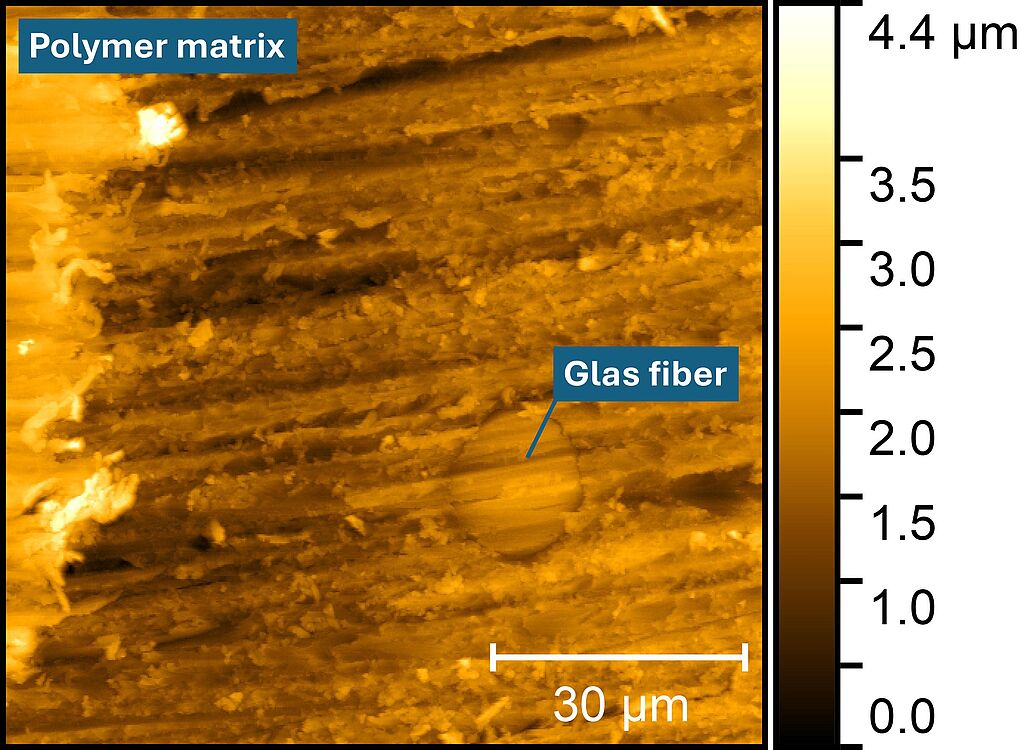
We characterize the resulting surfaces and interfaces using a range of advanced methods: surface molecular compositions are analyzed by XPS and FTIR spectroscopy, the boundary layer region is investigated by AFM, the wetting behavior of single fibers is determined with a fiber tensiometer, and the surface topography is examined by FE-SEM.