
Polymer Fouling
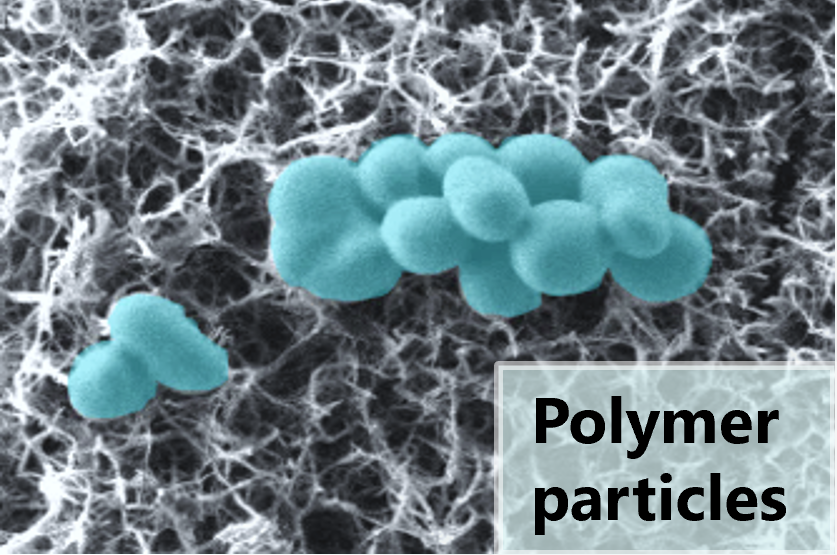
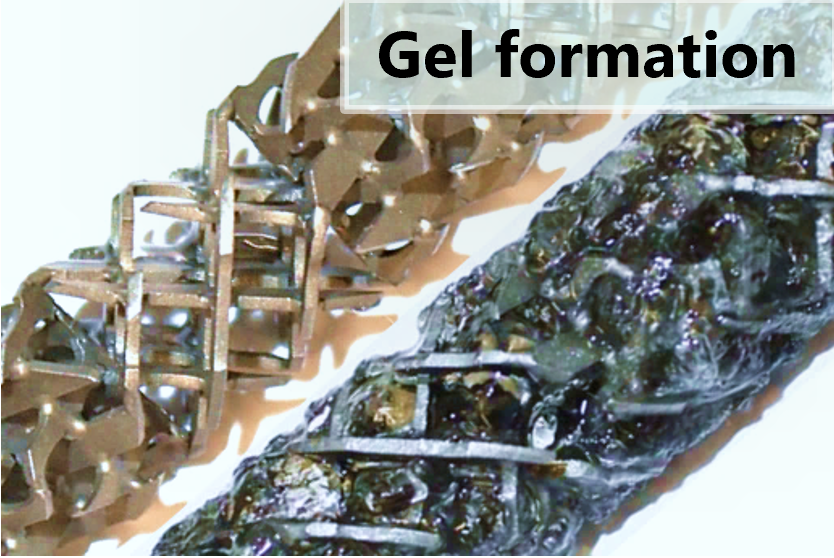
Polymer fouling poses major challenges for industry by forming unwanted deposits initially during polymer synthesis which has both high ecological and economic impact.
The working group studies molecular interactions at the interface using numerous electrochemical and spectroscopic analysis methods as well as AFM-based techniques such as single-molecule force and colloidal force spectroscopy. The results are supplemented by simulations, providing a comprehensive understanding of processes and dynamics occurring at the interface.
This knowledge enables application-oriented surface modifications that minimize deposits and therefore conserve ressources. The focus lies on the deposition of nanometer-scale films using processes that allow the modification of complex and structured elements from the millimetre to nanometer scale.
Selected publications:
Interactions of polyvinyl acetate dispersions with nanostructured superhydrophilic and superhydrophobic Ti6Al4V alloy surfaces
V. Neßlinger, J. Atlanov, G. Grundmeier
SN Applied Sciences (2024)
Thin Organic-Inorganic Anti-Fouling Hybrid-Films for Microreactor Components
V. Neßlinger, S. Welzel, F. Rieker, D. Meinderink, U. Nieken, G. Grundmeier
Macromolecular Reaction Engineering (2023), Cover Picture
Monitoring Polymeric Fouling in a Continuous Reactor by Electrochemical Impedance Spectroscopy
V. Neßlinger, S. Rust, J. Atlanov, W. Pauer, G. Grundmeier
Chemie Ingenieur Technik (2023)